 Wintel Digital Technology Limited
PVC Mould Lead Time: The Real Timeline, and the 6 Things That Break It
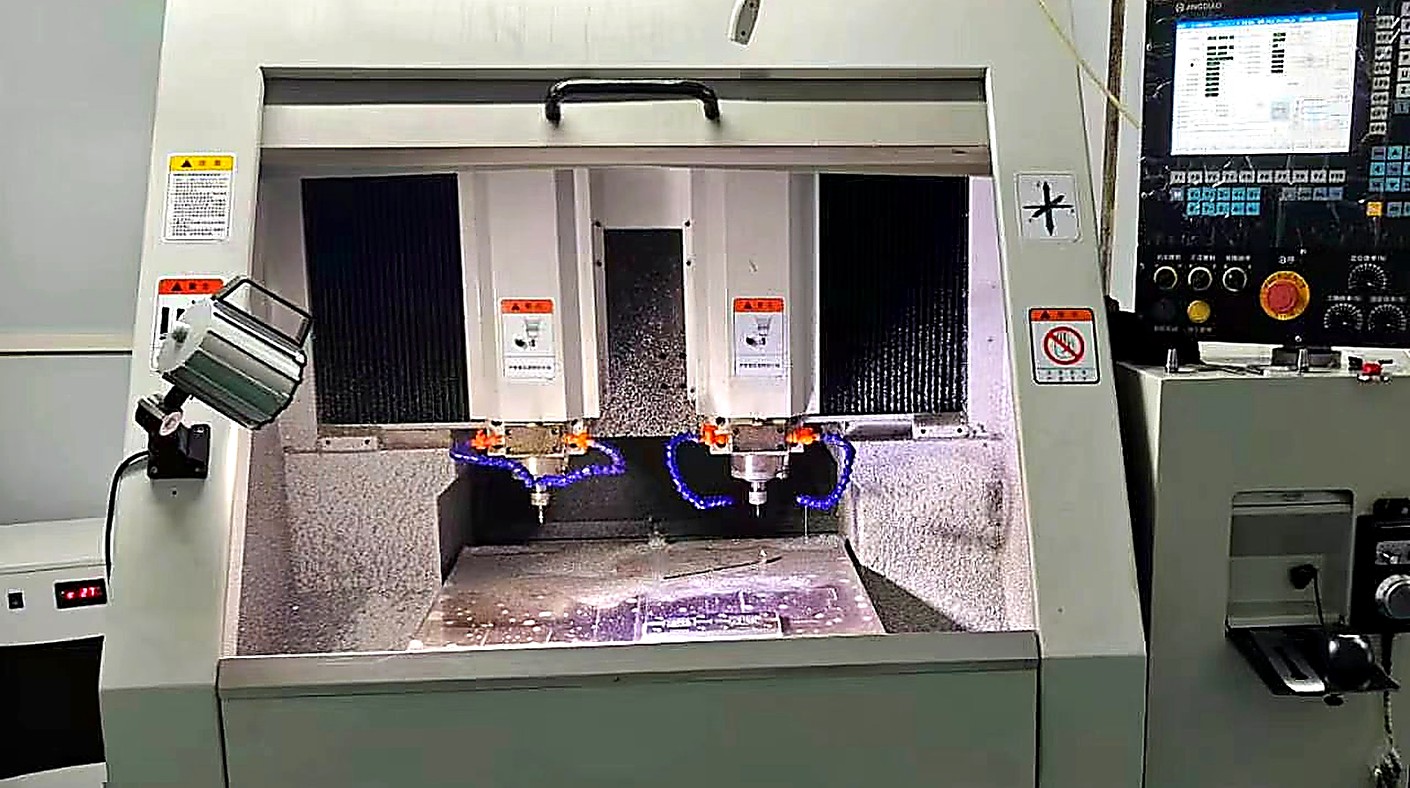
Your supplier quoted 15 days for tooling. It is now day 32, and you still do not have a first sample in your hands.
If that sounds familiar, you are not unlucky. You are running into the gap between how tooling lead times are quoted and how they actually behave. That gap has cost more gift campaigns, product launches and Christmas deliveries than any other single factor in the custom PVC business.
This article breaks down what actually happens between your purchase order and your first shipment — and what you can do to keep a deadline under control.
Why the quote never matches the calendar
Tooling lead time is usually quoted as a single number. Real lead time is a chain of dependent steps, and several of them depend on decisions that have not been made yet when the quote is written.
The quoted “15 days” almost always refers to one step only: cutting the mould. It does not include artwork confirmation, first-sample production, sample approval, modification rounds, mass production, or shipping.
Add those up honestly and a custom PVC project typically lands somewhere between 35 and 60 days from deposit to goods in your warehouse — depending on complexity and how fast decisions get made on your side.
The real timeline, step by step
Here is what the schedule looks like for a typical custom PVC item — a keychain, fridge magnet, luggage tag or 2D/3D figure.
| Step | Time | What happens |
|---|---|---|
| 1. Artwork & 3D modelling | 2–5 days | Your logo or concept is turned into a production-ready 3D file. The clock starts only when the file is approved by both sides. |
| 2. Mould design & tooling | 7–15 days | Aluminium moulds 7–12 days; steel moulds 15–25 days. Complexity, undercuts and number of colours all push this up. |
| 3. First sample (T1) | 2–5 days | The mould goes into the machine and produces the first articles. |
| 4. Review & modification (T1 → T2) | 3–10 days per round | The single biggest variable in the whole chain. Most projects need at least one round. Some need three. |
| 5. Mass production | 10–20 days | Injection or rotocasting, plus colouring, assembly and packing. Volume drives this number more than anything else. |
| 6. QC & packing | 2–3 days | Inspection, count and export packing. |
| 7. Shipping | 5–8 days air / 30–45 days sea | Depends on destination and chosen mode. |
Realistic total (deposit to dispatch): 25–45 days. Common total in practice: 35–60 days.
The gap between “realistic” and “common” is not incompetence. It is almost always one of six specific problems.
The 6 things that break the schedule
1. Tooling is a one-off, not a stock item
A mould for your product does not exist until someone machines it. There is no warehouse to pull it from. It cannot be expedited the way a standard part can. Every day lost in the design stage is a day lost downstream, with no way to compress the machining itself.
What goes wrong: the buyer assumes the mould already exists because the product “looks standard”. Nobody asks, and the schedule is built on a wrong assumption.
2. The first sample rarely passes
Almost every buyer assumes T1 will be right. In practice T1 is where you find out about shrinkage, wall thickness, colour drift, flashing and edge definition. Some of these are visible in a photo. Some only show up when you hold the part in your hand.
What goes wrong: the buyer plans no time for a modification round, treats T1 as the finish line, and sees the schedule collapse when a second round is needed.
3. Colour and hardness are their own project
Pantone matching on PVC and silicone is not printing. Pigment behaves differently at different wall thicknesses and different shore hardness. A colour that matches on a flat plaque can look noticeably different on a curved, thick part.
What goes wrong: the colour is specified late, the match needs two or three attempts, and each attempt costs days.
4. Peak season eats the factory
August to November is when every promotional gifts order in the world wants to be delivered by December. Factory capacity is finite, and mould-making shops are shared across product lines.
What goes wrong: a project confirmed in October sits in a queue behind work that was booked in July. The factory is not lying about its lead time — it is simply full.
5. Multi-layer subcontracting
Many suppliers do not own a tooling workshop. They take your order, then place it with a mould shop, who may place the colouring with a third party. Every handover adds a queue and removes a day of visibility.
What goes wrong: nobody can tell you where your mould actually is, because nobody in the chain can see it either.
6. The approval loop
Every decision that needs to travel between your office and the factory adds a full day. Logo placement, colour sign-off, packaging artwork, carton markings — if four of these are spread across two weeks, you have lost two weeks without producing anything at all.
What goes wrong: the delay is real, but it is invisible in the plan, so it gets blamed on the factory later.
How to protect your deadline
None of the above is unfixable. It is a planning problem, and it responds to planning.
- Count backwards, not forwards. Start from your in-hand date and subtract shipping, QC, production and at least one modification round.
- Book the peak season early. For December delivery, confirm tooling by July or August.
- Lock every variable before the mould is cut. Pantone reference, shore hardness, wall thickness, finish, packaging, carton markings. Changes after cutting are the most expensive kind.
- Ask for sample photos at agreed checkpoints. A two-minute photo update on day 5 prevents a two-week surprise on day 20.
- Understand what is in-house and what is not. Ask directly: do you own the mould workshop? Do you do colour matching yourself? The answers tell you how much visibility anyone actually has.
- Send one decision per email, not five. Consolidating choices into a single reply saves real calendar days, and costs you nothing.
How we run it at WINTEL
We have been manufacturing custom PVC and silicone soft-rubber gifts since 2004, with our own 1,500 sqm facility and 200+ staff. Because tooling, moulding, colouring and assembly happen under one roof, there is no handover queue in the middle of your project — and when you ask where your mould is, we can point at it.
Two things that directly address the problems above:
- Free 3D modelling and mock-up before tooling begins. You see the product and approve the design before anyone cuts metal. Most rework is eliminated here, not later.
- MOQ from 100 pcs, with tiered pricing at 100 / 300 / 500. Custom tooling does not have to mean a container-sized commitment to test a design.
Our standard tooling window is 7–15 days, first sample 7–10 days after approval, and mass production 18–25 days after sample sign-off — quoted as a sequence of steps, not as a single optimistic number.
The short version
If a supplier quotes you a tooling lead time as one number, ask them to break it into steps. Ask which steps they control and which they subcontract. Ask what happens if the first sample needs a modification.
The suppliers who can answer those three questions clearly are the ones whose schedules you can actually plan around.
Your deadline is your problem until you hand it to a supplier. Then it becomes theirs. Choose accordingly.
About WINTEL DIGITAL TECHNOLOGY LIMITED
Custom PVC and silicone soft-rubber gifts, OEM and ODM, since 2004. 1,500 sqm facility, 200+ staff, exporting to over 50 countries with a focus on Spanish-speaking and Latin American markets.
MOQ from 100 pcs. Free 3D modelling. Tooling, moulding, colouring and assembly in-house.
Web: wintel-com.cn | Email: [email protected]